



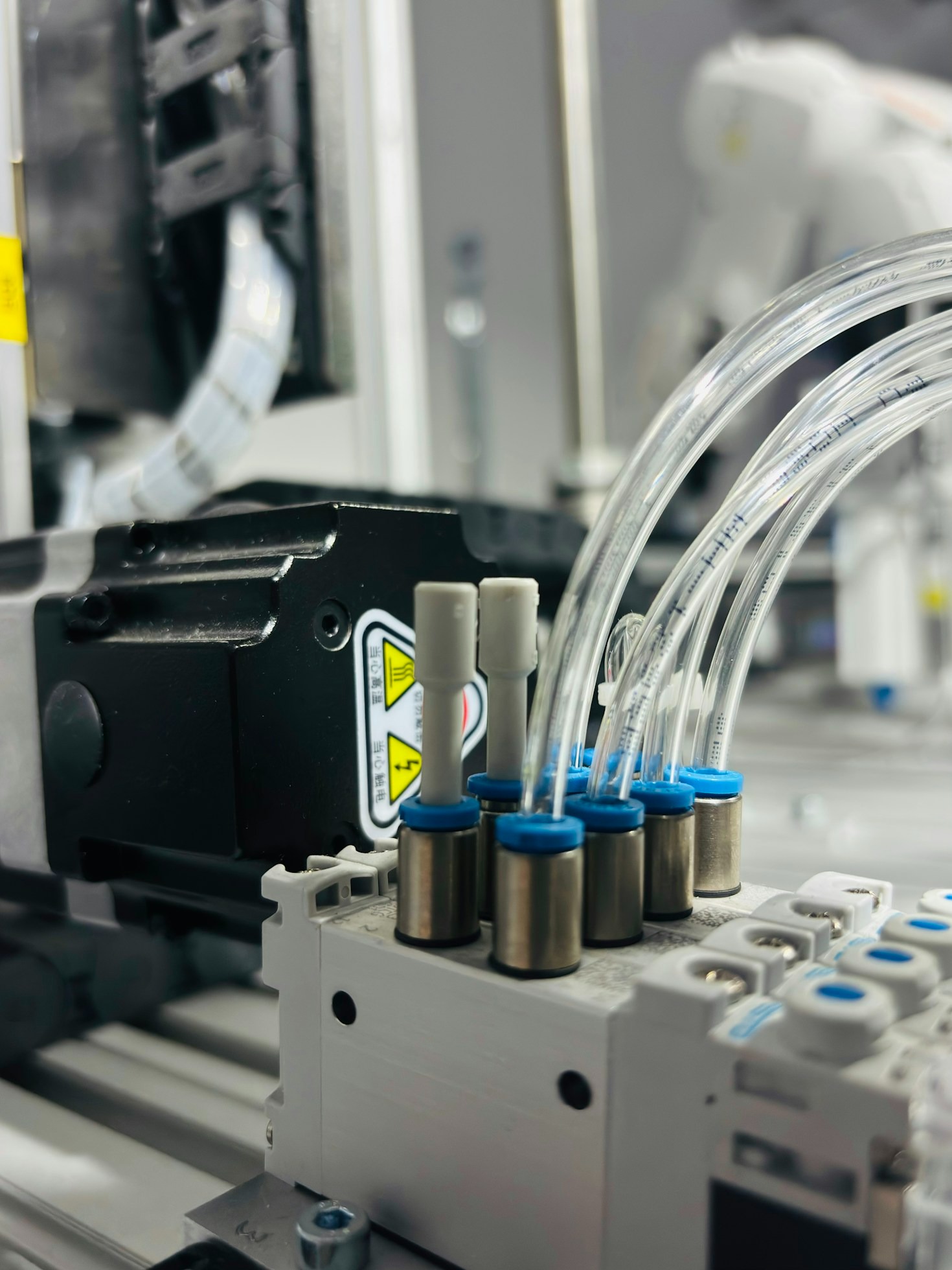
Industrial automation is evolving at a rapid pace, driven by the need for higher efficiency, lower costs, and more flexible production processes. Modern manufacturers are increasingly seeking intelligent solutions that not only automate but also optimize production. Understanding the key trends in automation is essential for making informed and sustainable decisions.
“Industrial automation is no longer just about technology—it is about intelligent and sustainable solutions.”
Focus on energy efficiency
Energy efficiency is becoming a top priority for industry. Manufacturing companies are increasingly:
- optimizing energy consumption;
- implementing energy-efficient components;
- analyzing and optimizing processes in real time.
In pneumatic systems, this includes reducing compressed air losses and intelligently managing pressures and operating cycles.
Intelligent and connected systems
Digitalization is penetrating deeper into industrial automation. Connected systems enable:
- collection and analysis of process data;
- remote monitoring and diagnostics;
- improved maintenance planning.
This trend supports the transition from reactive to predictive maintenance, reducing downtime and operating costs.
Modular and flexible solutions
Modern production demands flexibility. Modular automation systems are increasingly being implemented, as they:
- allow easy expansion and modification;
- adapt to different products and production volumes;
- shorten implementation times.
Pneumatic and automation components are designed to be easily combined and upgraded according to production requirements.
Integration of pneumatics and electronic control
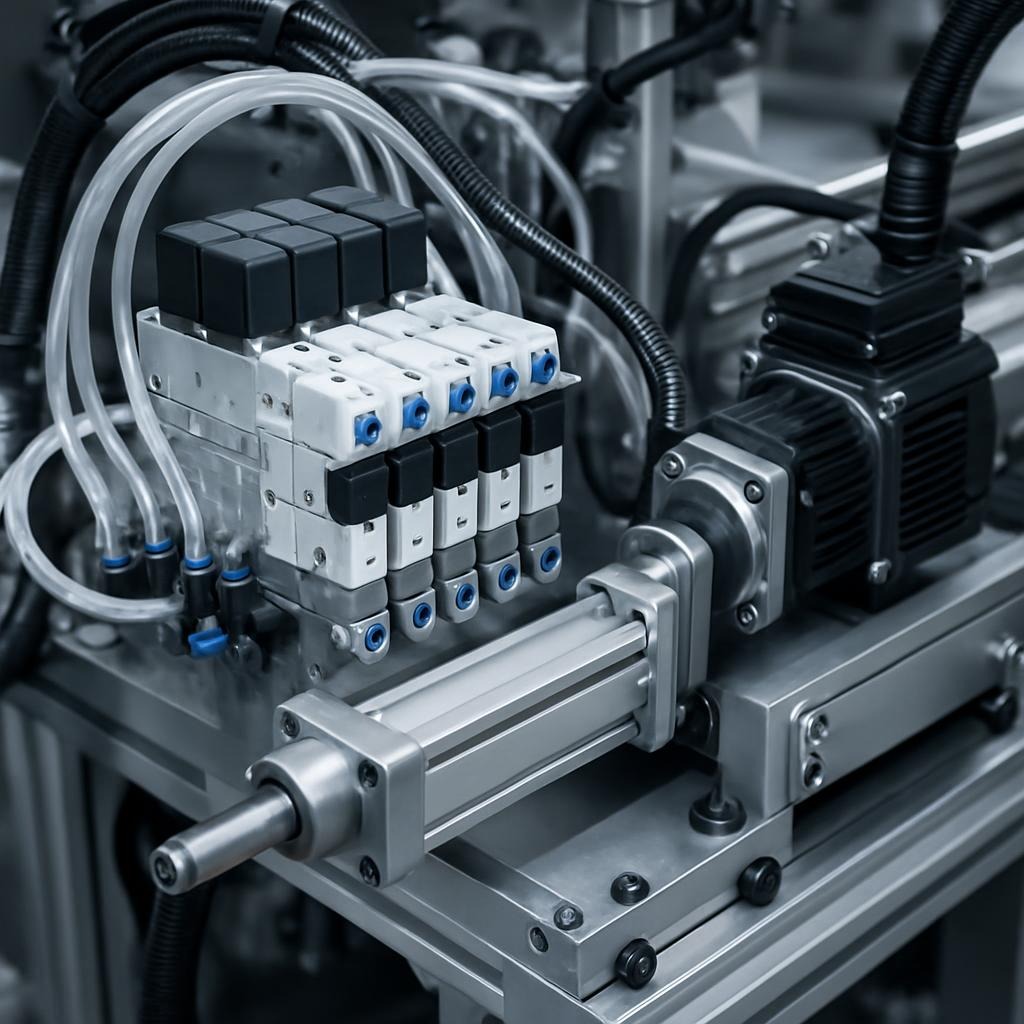
One of the most clearly defined trends is the integration of traditional pneumatics with modern electronic control systems. This results in:
- more precise motion control;
- improved process repeatability;
- higher efficiency of automated production lines.
These hybrid solutions combine the robustness of pneumatics with the intelligence of modern automation.
Optimization of existing systems
Instead of complete equipment replacement, more and more companies are focusing on optimizing existing systems. This includes:
- modernization of key components;
- implementation of monitoring systems;
- improvement of energy efficiency.
This approach enables significant performance improvements with lower investment levels.
The growing role of consulting services
As technological complexity increases, so does the need for expert support. Professional consulting helps companies to:
- select the right technologies;
- avoid costly mistakes;
- plan the sustainable development of their automation systems.
An expert-driven approach is becoming a critical factor for the successful implementation of new solutions.
Conclusion
Trends in industrial automation clearly indicate that the future lies in intelligent, energy-efficient, and flexible systems. Companies that monitor and adopt these trends gain a significant competitive advantage.
The right combination of modern technologies, high-quality components, and professional expertise forms the foundation for sustainable and efficient production.